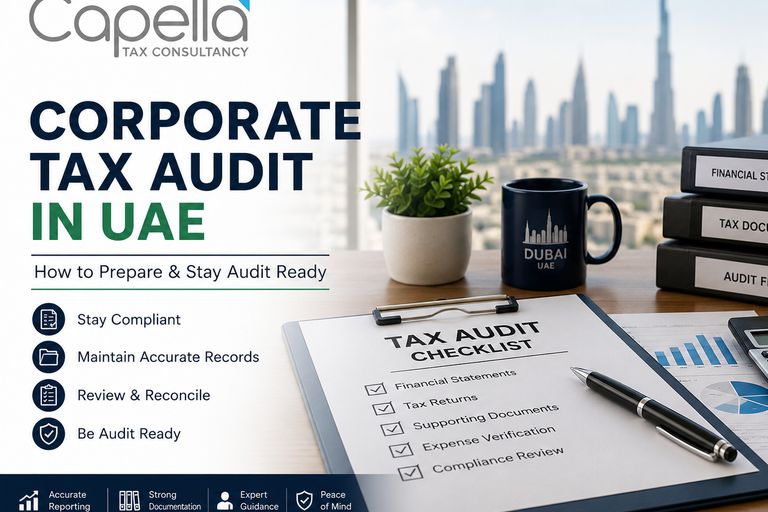

VAT compliance is now one of the most important financial responsibilities for any business operating in the UAE. With the Federal Tax Authority (FTA) sharpening its focus on accurate reporting and timely filing, this checklist helps startups, SMEs, freelancers, and large corporations stay compliant and avoid costly penalties in 2026.
Ensure Your VAT Registration Is Active
Businesses exceeding the mandatory taxable turnover threshold must register for VAT in the UAE, where the standard rate is currently 5% on most goods and services.
Mandatory registration applies to businesses with taxable supplies above AED 375,000, while voluntary registration is available to those exceeding AED 187,500.
- Verify your Tax Registration Number (TRN)
- Ensure VAT registration details are updated
- Review annual turnover regularly
- Confirm business activities are properly listed
Maintain VAT-Compliant Tax Invoices
The FTA requires businesses to issue valid tax invoices that meet UAE VAT regulations. Incorrect or incomplete invoices can lead to compliance issues during VAT audits.
- Business name and address
- Tax Registration Number (TRN)
- Invoice number and issue date
- VAT amount displayed separately
- Customer details
- Total payable amount
Keep Proper Accounting Records
Proper bookkeeping is mandatory for VAT compliance in the UAE, and businesses must retain records for at least five years. Accurate records also improve cash flow management and financial reporting.
- Sales and purchase invoices
- Credit and debit notes
- Import and export documentation
- Bank statements
- VAT return filings
- Expense receipts
File VAT Returns on Time
Late VAT return submissions can result in administrative penalties from the Federal Tax Authority. A careful pre-filing review reduces errors and improves compliance accuracy.
- Reconcile sales and purchase records
- Verify VAT collected and VAT paid
- Double-check calculations
- Review previous return adjustments
- Ensure all supporting documents are available
Reconcile Input VAT and Output VAT
Incorrect reconciliation between input VAT and output VAT is one of the most common VAT mistakes, and improper reconciliation may trigger FTA scrutiny during audits.
- Verify supplier invoices
- Identify recoverable VAT correctly
- Separate exempt and taxable supplies
- Review reverse charge transactions
- Match VAT returns with accounting records
Monitor International and GCC Transactions
Businesses dealing with imports, exports, or GCC transactions must apply special VAT treatments. Incorrect handling of cross-border transactions can lead to reporting discrepancies.
- Reverse charge mechanism
- Import VAT accounting
- Export documentation
- Zero-rated supplies
- Cross-border service transactions
Prepare for FTA Audits
FTA audits are becoming increasingly common across UAE businesses, so a proactive audit-readiness strategy helps reduce compliance risks. Working with an FTA-registered tax agent can strengthen audit support and filing accuracy.
- Organize accounting records digitally
- Maintain proper invoice tracking
- Conduct regular VAT reviews
- Train accounting staff on VAT updates
- Work with FTA-registered tax agents
Common Mistakes to Avoid
Many UAE businesses face penalties due to avoidable compliance errors. Maintaining accurate financial records and seeking professional advice can significantly reduce these risks.
- Late VAT registration
- Delayed VAT return filing
- Incorrect VAT calculations
- Missing invoices
- Claiming non-recoverable VAT
- Poor bookkeeping practices